
Video
Leaving God - Why I left God and why so many others are too
Top Documentary Films
The fastest growing religion in the United States seems to be no religion at all. A 2016 study conducted by the Public Religion Research Institute found...
Top Documentary Films
The fastest growing religion in the United States seems to be no religion at all. A 2016 study conducted by the Public Religion Research Institute found...






Washington Post
Turns out it's pretty hard to believe in nothing when your psyche is wired for faith.
Wikipedia
Popularized by Richard Dawkins in The God Delusion, the spectrum of theistic probability is a way of categorizing one's belief regarding the probability of the existence of a deity.
Wendy Thomas Russell
book
Darrel Ray
Dr. Darrel Ray, psychologist and lifelong student of religion, discusses religious infection from the inside out. How does guilt play into religious infection? Why is sexual control so important to so many religions? What causes the anxiety and neuroticism around death and dying? How does religion inject itself into so many areas of life, culture, and politics? The author explores this and much more in his book The God Virus: How Religion Infects Our Lives and Culture. This second-generation book takes the reader several steps beyond previous offerings and into the realm of the personal and emotional mechanisms that affect anyone who lives in a culture steeped in religion. Examples are used that anyone can relate to and the author gives real-world guidance in how to deal with and respond to people who are religious in our families, and among our friends and coworkers.
Francesca Stavrakopoulou
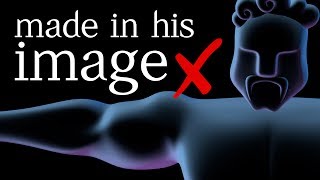
The scholarship of theology and religion teaches us that the God of the Bible was without a body, only revealing himself in the Old Testament in words mysteriously uttered through his prophets, and in the New Testament in the body of Christ. The portrayal of God as corporeal and masculine is seen as merely metaphorical, figurative, or poetic. But, in this revelatory study, Francesca Stavrakopoulou presents a vividly corporeal image of God: a human-shaped deity who walks and talks and weeps and laughs, who eats, sleeps, feels, and breathes, and who is undeniably male. Here is a portrait--arrived at through the author's close examination of and research into the Bible--of a god in ancient myths and rituals who was a product of a particular society, at a particular time, made in the image of the people who lived then, shaped by their own circumstances and experience of the world. From head to toe--and every part of the body in between--this is a god of stunning surprise and complexity, one we have never encountered before.
Dan Barker
Expanding on a concept from New York Times bestseller The God Delusion, former ordained minister and current atheist Dan Barker gives us a biblical play-by-play illustrating God's not-so-admirable qualities. What words come to mind when we think of God? Merciful? Just? Compassionate? In fact, the Bible lays out God's primary qualities clearly: jealous, petty, unforgiving, bloodthirsty, vindictive--and worse! Originally conceived as a joint presentation between influential thinker and bestselling author Richard Dawkins and former evangelical preacher Dan Barker, this unique book provides an investigation into what may be the most unpleasant character in all fiction. Barker combs through both the Old and New Testament (as well as 13 different editions of the "Good Book"), presenting powerful evidence for why the Scripture shouldn't govern our everyday lives. This witty, well-researched book suggests that we should move past the Bible and clear a path to a kinder and more thoughtful world.
Michael Martin
Most people, believers and nonbelievers alike, are unfamiliar with the variety and force of arguments for the impossibility of God. Yet o...
A.C. Grayling
What are the arguments for and against religion and religious belief--all of them--right across the range of reasons and motives that peo...
Robert Wright
In this sweeping narrative that takes us from the Stone Age to the Information Age, Robert Wright unveils an astonishing discovery: there is a hidden pattern that the great monotheistic faiths have followed as they have evolved. Through the prisms of archaeology, theology, and evolutionary psychology, Wright's findings overturn basic assumptions about Judaism, Christianity, and Islam, and are sure to cause controversy. He explains why spirituality has a role today, and why science, contrary to conventional wisdom, affirms the validity of the religious quest. And this previously unrecognized evolutionary logic points not toward continued religious extremism, but future harmony.
The PsycHoe Podcast
This is Pt. 1 of a four-part series. Today, I was blessed to share space with the legendary Dr. Darrel Ray. He is a psychologist and religion specialist who helps individuals all around the world recover from religious trauma. He does this through his orga...