
🎬 Videos(15)
Video
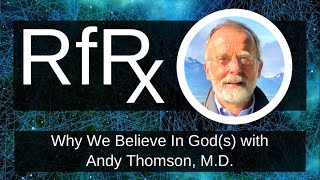
RfRx - Why we believe in God(s) with Andy Thomson
Recovering from Religion
In this RfRx session Andy Thomson will deliver a presentation on the basic mechanisms the mind uses to produce and accept religious beliefs. He will explore multiple topics such as human evolution, the neurobiology of ritual or how certain cognitive mechanisms generate religion.

Video
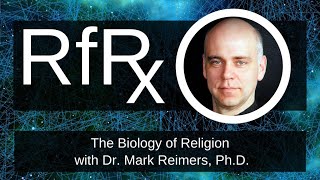
RfRx - The Biology of Religion with Dr Mark Reimers, PhD
Recovering from Religion
Are humans 'hard-wired' for religion?

Video
Street Epistemology: Daniel & Beau | What Else Do We Have But Faith?
Anthony Magnabosco
Objectively Dan (later of Truth Wanted) interviewed as a Christian
Video
Street Epistemology: Daniel (2) | Surmounting Faith (with subtitles)
Anthony Magnabosco
Objectively Dan (later of Truth Wanted) interviewed as a Christian - Follow-up
Video
Daniel Dennett: Breaking the Spell - Religion as a Natural Phenomenon
The University of Edinburgh
video
Video
Good Reasons for "Believing" in God - Dan Dennett, AAI 2007
Richard Dawkins Foundation for Reason & Science
video
Video
The Believing Brain: Evolution, Neuroscience, and the Spiritual Instinct
World Science Festival
God, they say, is in the details. But could God also be in our frontal lobes? Every culture from the dawn of humankind has imagined planes of existence beyond the reach of our senses, spiritual domains that shape our Earthly experiences. Why do beliefs of the fantastic hold such powerful sway over our species? Is there something in our evolutionary history that points to an answer? Does neuroscience hold the key? Straddling the gap between science and religion, Brian Greene is joined by renowned neuroscientists, anthropologists, and evolutionary biologists, to explore one of the most profound mysteries of our existence.
Video
RfRx - The God Virus with Dr. Darrel Ray
Recovering from Religion
Dr Darrel Ray is the Founder & President of Recovering from Religion. He has been a psychologist for over thirty years and is the author of four books: including "The God Virus-How Religion Infects Our Lives and Culture" and "Sex and God-How Religion Distorts Sexuality". Dr. Ray has been a student of religion most of his life and holds a Masters Degree in religion as well as a Bachelor's Degree in Sociology/Anthropology with a Doctorate in Psychology.
Video
RfRx - Religion: What is it good for? with Dr. Kara Griffin
Recovering from Religion
In this episode, cultural anthropologist Kara Griffin will discuss religion as a social institution. Why is religious belief so common, even considered by some to be a universal human experience? Is it possible to have a functional society without religious belief? Why do some people reject the dominant beliefs of the community they grew up in while others seemingly never question it? We will examine the role of religion as a social institution in various settings, debunk some common myths, and explore recent trends in religious beliefs and practices from an anthropological perspective. Dr. Kara Griffin holds undergraduate degrees in Psychology, International Relations, and Criminal Justice, a Master's Degree in Dispute Resolution & Conflict Management, and a PhD in Anthropology. A former southern baptist evangelical mega-church member, they enjoy working with secular community services that support other people who may have experienced judgement, repression, trauma or other struggles related to involvement with religious groups. At RfR, Kara serves as the Online Programming Director and (usually) hosts the weekly RfRx Talks sessions.
Video
RfRx - The Illusion of God's Presence with Jack Wathey
Recovering from Religion
John C. Wathey (Wah-thee) is a retired computational biologist, whose interests include evolutionary algorithms, the biology of nervous systems, and electoral reform. He got his PhD in Neurosciences at UC San Diego and has spent most of his career working on computer simulations of protein folding. His first book, The Illusion of God's Presence, explores the evolution of the emotions and intuitions behind religious belief, emphasizing behavioral and psychological research. His latest book is The Phantom God: What Neuroscience Reveals about the Compulsion to Believe. It relates the motivating forces behind religiousness to the neural circuitry of embodiment, mother-infant attachment, adult sexual pair-bonding, addiction, selective attention, hallucinations, and many other neurological surprises.
📄 Articles(8)
Article
What Actually Is a Belief? And Why Is It So Hard to Change?
Psychology Today
Beliefs evolved as energy-saving shortcuts. Restructuring them is costly.
Article
Spectrum of theistic probability
Wikipedia
Popularized by Richard Dawkins in The God Delusion, the spectrum of theistic probability is a way of categorizing one's belief regarding the probability of the existence of a deity.
Article
Mind Infections, Part 1: How to Recognize Them
Eric Blair
Imagine your mind for a moment. It is a large field in which all your ideas are roaming freely. Animals like dogs, cats, horses, birds but...
Article
Why do we believe in God? The connection between God and Beavis and Butt-head.
Satoshi Kanazawa
article
Article
Free will beliefs are better predicted by dualism than determinism beliefs across different cultures
Resource Director
Specifically, we assess the relation of FWB, as measured using the Free Will Inventory, to determinism, dualism and related concepts like libertarianism and compatibilism. We find that libertarian, compatibilist, and dualist, intuitions were related to FWB, but that these intuitions were often logically inconsistent. Importantly, direct comparisons suggest that dualism was more predictive of FWB than other intuitions.
📚 Books(23)
Book
Lost Faith and Wandering Souls - A Psychology of Disillusionment, Mourning, and the Return of Hope
David Morris
A deeper look at the religious identity crisis of our time that shows a way past our debates and toward a healthier spirituality. Americans are obsessed with religion. You're either in or you're out; you're this or you're that. Except now, so many of us just want to forget the whole thing. We often feel angry, hurt, and alone, while knowing there's a better way. Lost Faith and Wandering Souls helps readers get at these important feelings of disillusionment and shows that the keys to rediscovering hope are within. Religion commentator David Morris puts theological arguments aside and holds up our humanity as equally important. He treats the loss of faith as if it were any other kind of loss, and asks, what if we learned to mourn? He turns to psychoanalytic psychology for its interpretive power. With the concepts of mourning, pining, and play, he shines a light on a path forward. Applying these concepts to contemporary spiritual memoirs, Morris discovers a back-and-forth movement in overcoming faith loss, going between feelings of numbness, self-recrimination, and wandering to playfulness, self-agency, and belonging. If we can feel our loss, he argues, then we can rediscover meaning making. Lost Faith and Wandering Souls acknowledges the religious identity crisis of our time and the full power of the psychological journey. By looking beneath the surface at deep, lifelong dynamics, it shows a way through our losses individually and socially toward a healthier, inclusive spirituality.
Book
The God Virus: How Religion Infects Our Lives and Culture
Darrel Ray
Dr. Darrel Ray, psychologist and lifelong student of religion, discusses religious infection from the inside out. How does guilt play into religious infection? Why is sexual control so important to so many religions? What causes the anxiety and neuroticism around death and dying? How does religion inject itself into so many areas of life, culture, and politics? The author explores this and much more in his book The God Virus: How Religion Infects Our Lives and Culture. This second-generation book takes the reader several steps beyond previous offerings and into the realm of the personal and emotional mechanisms that affect anyone who lives in a culture steeped in religion. Examples are used that anyone can relate to and the author gives real-world guidance in how to deal with and respond to people who are religious in our families, and among our friends and coworkers.
Book
Sapiens: A Brief History of Humankind
Yuval Noah Harari
In Sapiens, Dr Yuval Noah Harari spans the whole of human history, from the very first humans to walk the earth to the radical – and sometimes devastating – breakthroughs of the Cognitive, Agricultural and Scientific Revolutions. Drawing on insights from biology, anthropology, paleontology and economics, he explores how the currents of history have shaped our human societies, the animals and plants around us, and even our personalities.
Book
The Belief Instinct: The Psychology of Souls, Destiny, and the Meaning of Life
Jesse Bering
In this lively and masterfully argued new book, Jesse Bering unveils the psychological underpinnings of why we believe. Combining lucid accounts of surprising new studies with insights into literature, philosophy, and even pop culture, Bering gives us a narrative that is as entertaining as it is thought-provoking. He sheds light on such topics as our search for a predestined life purpose, our desire to read divine messages into natural disasters and other random occurrences, our visions of the afterlife, and our curiosity about how moral and immoral behavior are rewarded or punished in this life.
Book
The Illusion of God's Presence: The Biological Origins of Spiritual Longing
John C. Wathey
Starting with a vivid narrative account of the life-threatening hike that triggered his own mystical experience, biologist John Wathey takes the reader on a scientific journey to find the sources of religious feeling and the illusion of God's presence. His book delves into the biological origins of this compelling feeling, attributing it to innate neural circuitry that evolved to promote the mother-child bond. Dr. Wathey, a veteran neuroscientist, argues that evolution has programmed the infant brain to expect the presence of a loving being who responds to the child's needs. As the infant grows into adulthood, this innate feeling is eventually transferred to the realm of religion, where it is reactivated through the symbols, imagery, and rituals of worship. The author interprets our various conceptions of God in biological terms as illusory supernormal stimuli that fill an emotional and cognitive vacuum left over from infancy.
Book
Darwin, God and the Meaning of Life
Steve Stewart-Williams
If you accept evolutionary theory, can you also believe in God? Are human beings superior to other animals, or is this just a human prejudice? Does Darwin have implications for heated issues like euthanasia and animal rights? Does evolution tell us the purpose of life, or does it imply that life has no ultimate purpose? Does evolution tell us what is morally right and wrong, or does it imply that ultimately nothing is right or wrong? In this fascinating and intriguing book, Steve Stewart-Williams addresses these and other fundamental philosophical questions raised by evolutionary theory and the exciting new field of evolutionary psychology. Drawing on biology, psychology and philosophy, he argues that Darwinian science supports a view of a godless universe devoid of ultimate purpose or moral structure, but that we can still live a good life and a happy life within the confines of this view.
Book
Religion Explained: The Evolutionary Origins of Religious Thought
Pascal Boyer
Many of our questions about religion, says the internationally renowned anthropologist Pascal Boyer, were once mysteries, but they no longer are: we are beginning to know how to answer questions such as "Why do people have religion?" and "Why is religion the way it is?" Using findings from anthropology, cognitive science, linguistics, and evolutionary biology, Boyer shows how one of the most fascinating aspects of human consciousness is increasingly admissible to coherent, naturalistic explanation. And Man Creates God tells readers, for the first time, what religious feeling is really about, what it consists of, and how it originates. It is a beautifully written, very accessible book by an anthropologist who is highly respected on both sides of the Atlantic. As a scientific explanation for religious feeling, it is sure to arouse controversy.
Book
In Gods We Trust: The Evolutionary Landscape of Religion
Scott Atran
This ambitious, interdisciplinary book seeks to explain the origins of religion using our knowledge of the evolution of cognition. A cognitive anthropologist and psychologist, Scott Atran argues that religion is a by-product of human evolution just as the cognitive intervention, cultural selection, and historical survival of religion is an accommodation of certain existential and moral elements that have evolved in the human condition.
Book
Minds and Gods: The Cognitive Foundations of Religion
Todd Tremlin
Around the world and throughout history, in cultures as diverse as ancient Mesopotamia and modern America, human beings have been compelled by belief in gods and developed complex religions around them. But why? What makes belief in supernatural beings so widespread? And why are the gods of so many different people so similar in nature? This provocative book explains the origins and persistence of religious ideas by looking through the lens of science at the common structures and functions of human thought.
Book
The Religion Virus: Why We Believe in God: An Evolutionist Explains Religion's Incredible Hold on Humanity
Craig A. James
By applying 'survival of the fittest' principles to religion, we can understand how religion became incredibly infectious to the average human, perfectly adapted to its 'environment' - your mind.
Book
Plant neurotoxins and the paradox of drug reward
Edward H. Hagen - Washington State University Vancouver
book
Book
The Phantom God - What Neuroscience Reveals about the Compulsion to Believe
John C. Wathey
Does neuroscience have anything to say about religious belief or the existence of God? Some have tried to answer this question, but, in doing so, most have strayed from the scientific method. In The Phantom God, computational biologist and neuroscientist John C. Wathey, Ph.D., tackles this problem head-on, exploring religious feelings not as the direct perception by the brain of some supernatural realm, nor as the pathological misfiring of neurons, but as a natural consequence of how our brains are wired.
Book
How We Believe: Science, Skepticism, and the Search for God
Michael Shermer
Recent polls report that 96 percent of Americans believe in God, and 73 percent believe that angels regularly visit Earth. Why is this? Why, despite the rise of science, technology, and secular education, are people turning to religion in greater numbers than ever before? Why do people believe in God at all? These provocative questions lie at the heart of How We Believe , an illuminating study of God, faith, and religion. Bestselling author Michael Shermer offers fresh and often startling insights into age-old questions, including how and why humans put their faith in a higher power, even in the face of scientific skepticism. Shermer has updated the book to explore the latest research and theories of psychiatrists, neuroscientists, epidemiologists, and philosophers, as well as the role of faith in our increasingly diverse modern world. Whether believers or nonbelievers, we are all driven by the need to understand the universe and our place in it. How We Believe is a brilliant scientific tour of this ancient and mysterious desire.
Book
Why People Believe Weird Things: Pseudoscience, Superstition, and Other Confusions of Our Time
Michael Shermer
In this age of supposed scientific enlightenment, many people still believe in mind reading, past-life regression theory, New Age hokum, and alien abduction. A no-holds-barred assault on popular superstitions and prejudices, with more than 80,000 copies in print, Why People Believe Weird Things debunks these nonsensical claims and explores the very human reasons people find otherworldly phenomena, conspiracy theories, and cults so appealing. In an entirely new chapter, "Why Smart People Believe in Weird Things," Michael Shermer takes on science luminaries like physicist Frank Tippler and others, who hide their spiritual beliefs behind the trappings of science. Shermer, science historian and true crusader, also reveals the more dangerous side of such illogical thinking, including Holocaust denial, the recovered-memory movement, the satanic ritual abuse scare, and other modern crazes. Why People Believe Strange Things is an eye-opening resource for the most gullible among us and those who want to protect them.
Book
Breaking the Spell, Darwin's Dangerous Idea,
Daniel C. Dennett
For all the thousands of books that have been written about religion, few until this one have attempted to examine it scientifically: to ask why--and how--it has shaped so many lives so strongly. Is religion a product of blind evolutionary instinct or rational choice? Is it truly the best way to live a moral life? Ranging through biology, history, and psychology, Daniel C. Dennett charts religion's evolution from "wild" folk belief to "domesticated" dogma. Not an antireligious screed but an unblinking look beneath the veil of orthodoxy, Breaking the Spell will be read and debated by believers and skeptics alike.
Book
The God Delusion, The Magic of Reality, The Blind Watchmaker, Climbing Mount Improbable,
Richard Dawkins
book
🎙️ Podcasts(1)
Podcast
Belief and the Brain: a Psychiatrist and a Neuroscientist on Evolution and Religion
Spreaker
Dr. Andy Thomson is a psychiatrist and author of "Why We Believe in God(s): A Concise Guide to the Science of Faith. Dr. John Wathey is a computational biologist, neuroscientist, and author of "The Il