
Video
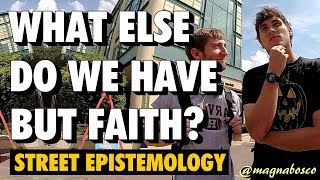
Street Epistemology: Daniel & Beau | What Else Do We Have But Faith?
Anthony Magnabosco
Objectively Dan (later of Truth Wanted) interviewed as a Christian
Anthony Magnabosco
Objectively Dan (later of Truth Wanted) interviewed as a Christian

Anthony Magnabosco
Objectively Dan (later of Truth Wanted) interviewed as a Christian - Follow-up

Thinker Of Thoughts
video
Center for Inquiry
video


Recovering from Religion
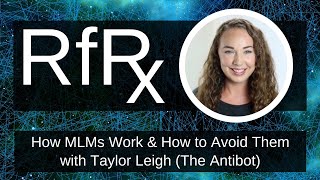
In this RfRx session Taylor will discuss what MLMs are, the risks and statistics involved with MLMs, who they prey on, and how to avoid falling into one
Recovering from Religion
Understanding our innate cognitive failings can help us all think more rationally, better avoid errors, and hopefully live better lives.

Recovering from Religion
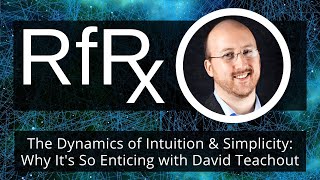
Platitudes and pithy statements are so enthralling, even when supposedly dedicated to reason and rationality. "Just follow the science," "the truth will set you free," "trust your intuition" are just a few examples of simple, and seemingly deep, platitudes. In this RfRx, David Teachout will join us once again to explore why platitudes are so enthralling, even when supposedly dedicated to reason and rationality. We'll cover ways to reinvigorate our humility, delve into the "scout mindset," as well as learn to acknowledge that religion isn't the source of our irrationality, we are.
Dr. Dad
Welcome to Dr. Dad! I'm Ron Crouch, a.k.a. Dr. Dad, an author and child psychologist. My mission in life is to help every kid have a happy childhood, and my books are all about doing that by using the best that science and psychology has to offer. If you read my books or browse this site you will see that I am a huge fan of critical thinking. Ok... maybe I'm a little obsessed with it. But I have good reasons! Critical thinking is crucial for living a happy and healthy life in our modern world. I think most of us grown ups know that is true and we try to be critical thinkers. But children need to learn critical thinking too. Especially now with the flood of misinformation that kids encounter online and in daily life, they need to learn healthy skepticism as early as possible!
Michael Shermer
Scroll down the page to see the 10 points of the Conspiracy Detection Kit.
Deanna & Skylar and Daniel Peluso
For a class project, a pair of 11th grade physics students created an infographic inspired by Michael Shermer's Baloney Detection Kit.
Spurious Correlations
Why do these things correlate? These 15 correlations will blow your mind. (Is this headline sensationalist enough for you to click on it yet?)
The Skeptic's Dictionary
The Skeptic's Dictionary features definitions, arguments, and essays on hundreds of strange beliefs, amusing deceptions, and dangerous delusions. It also features dozens of entries on logical fallacies, cognitive biases, perception, science, and philosophy.
Wikipedia
The Art of Thinking Clearly is a 2013 book by the Swiss writer Rolf Dobelli which describes in short chapters 99 of the most common thinking errors - ranging from cognitive biases to envy and social distortions. The book was written as weekly columns in leading newspapers in Germany, the Netherlands, and Switzerland, and later in two German books. The book was in the top ten of Germany's Der Spiegel Bestseller list for 80 consecutive weeks and has been translated into many languages. Outside Germany and Switzerland, the book hit the top ten bestseller lists in the U.K, South Korea, India, Ireland, Singapore, and Iran. Author Nassim Taleb has asserted that the book included sections plagiarised from Taleb's manuscript of Antifragile.
Wikipedia
Postdiction involves explanation after the fact. In skepticism, it is considered an effect of hindsight bias that explains claimed predictions of significant events such as plane crashes and natural disasters.
Skeptic
The Skeptical Studies Curriculum Resource Center is a comprehensive, free repository of resources for teaching students how to think skeptically. This Center contains a selection of books, reading lists, course syllabi, in-class exercises, PowerPoint presentations, student projects, papers, and videos that you may download and use in your own classes.
RationalWiki
Our purpose here at RationalWiki includes: * Analyzing and refuting pseudoscience and the anti-science movement; * Documenting the full range of crank ideas; * Explorations of authoritarianism and fundamentalism; * Analysis and criticism of how these subjects are handled in the media.
YourBias.is
Cognitive biases make our judgments irrational. This website helps you identify some of the most common biases and how to avoid falling victim to them.
OnlySky
Understanding critical thinking--what it is, why it's important--from a secular point of view.
Foundation for Critical Thinking
The Center for Critical Thinking and Moral Critique and the Foundation for Critical Thinking -- two sister educational non-profit organizations -- work closely together to promote educational reform. We seek to promote essential change in education and society through the cultivation of fairminded critical thinking.
Discover Magazine
Cut through flawed assumptions and false beliefs -- including your own -- with these strategies.
Berationable
Science, reason and rationality to help you make better decisions for a better life.
Tim O'Neill
This blog is for articles, book reviews and critiques relating to "New Atheist Bad History" – the misuse of history and the use of biased, erroneous or distorted pseudo history by anti-theistic atheists. The author is an atheist himself so no, this is not some theist apologetics blog. It is simply an attempt to call out and correct the misuse of history, because rationalists should not base their arguments on errors and distortions.
Thinking is Power
Thinking Is Power was created by Melanie Trecek-King to teach critical thinking in an accessible and (hopefully) entertaining way. If you want to learn how to save money, make better decisions, and avoid being fooled or harmed, this site is for you!
Open Textbook Library
This is an introductory textbook in logic and critical thinking. The goal of the textbook is to provide the reader with a set of tools and skills that will enable them to identify and evaluate arguments. The book is intended for an introductory course that covers both formal and informal logic. As such, it is not a formal logic textbook, but is closer to what one would find marketed as a "critical thinking textbook."
Steven Novella
It's intimidating to realize that we live in a world overflowing with misinformation, bias, myths, deception, and flawed knowledge. There really are no ultimate authority figures-no one has the secret and there is no place to look up the definitive answers to our questions (not even Google). But, by thinking skeptically and logically, we can combat sloppy reasoning, bad arguments and superstitious thinking. It's difficult, and takes a lot of vigilance, but it's worth the effort.
Plato, Morris Kaplan
The Greek philosopher Socrates lived by the tenet that the path to truth was built on questions. When conversing with his students and followers he sought to reach the foundations of their views, asking questions until he found contradictions that exposed faults in their logic. This process became known as the Socratic Method. An enigmatic figure in history, Socrates left no writings. Much of what we know about his life and work comes from the accounts of his disciple Plato. Plato described Socrates as the ultimate teacher as well as the creator of modern argument and rhetoric. The Socratic Dialogues contain Plato's most important writings on Socrates, including commentaries on the virtues of friendship, courage, and temperance that display the Socratic Method at its highest degree. Plato's account of Socrates' stunning self-defense during his trial for corrupting the minds of his followers is also included.
The Sensibly Speaking Podcast on Apple Podcasts
The Sensibly Speaking Podcast is a weekly show, posting a new episode each Saturday, covering current events and topics from a skeptical, humanist and critical thinking approach. Join Chris Shelton, the Critical Thinker at Large, as he goes over varied topics from critical thinking to science to talking in detail about hot topics in the news
CFI: Center for Inquiry
The Center for Inquiry strives to foster a secular society based on reason, science, freedom of inquiry, and humanist values.
Cognitive Immunology Research Collaborative
CIRCE is an institute dedicated to developing humanity's immunity to the ideas and ideologies that consistently frustrate human aspirations. Through the deliberate application of scientific findings on the mind's immune system, CIRCE seeks to prevent epidemics of unreason. CIRCE emerged as researchers and scholars, galvanized by Andy Norman's book Mental Immunity, began to pull together around the science of cognitive immunology. Within months of the book's release, scholars from all over the world--America, Australia, the UK, the Netherlands, Belgium--rallied to Andy's vision. Since CIRCE's formation, psychologists and philosophers, cognitive scientists and evolutionary biologists, behavioral economists and information epidemiologists have begun working together to deepen our understanding of mental immunity. CIRCE strives to apply the resulting understanding to our most persistent and pernicious social problems.
Street Epistemology
Street Epistemology is a conversational tool that helps people reflect on the reliability of the methods used to arrive at their deeply-held beliefs.