

Death
"We are going to die, and that makes us the lucky ones. Most people are never going to die because they are never going to be born. The potential people who could have been here in my place but who will in fact never see the light of day outnumber the sand grains of Arabia. Certainly those unborn ghosts include greater poets than Keats, scientists greater than Newton. We know this because the set of possible people allowed by our DNA so massively exceeds the set of actual people. In the teeth of these stupefying odds it is you and I, in our ordinariness, that are here. We privileged few, who won the lottery of birth against all odds, how dare we whine at our inevitable return to that prior state from which the vast majority have never stirred?" -- Richard Dawkins
19 resources
🎬 Videos(11)


Video
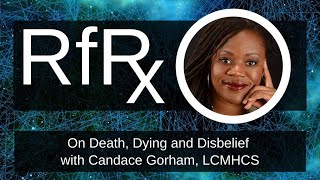
RfRx - On Death, Dying and Disbelief with Candace Gorham, LCMHCS
Recovering from Religion
Everyone grieves in their own way and according to their own timeframe, the accepted wisdom tells us. But those in mourning rarely find comfort in knowing this and those looking to support someone in mourning can do little with this advice, leaving them with a sense of helplessness. As a mental health professional and someone who has dealt with her own share of personal grief, Candace R. M. Gorham understands well the quest for relief. The truth of the matter, she says, is there is no one way to grieve, but there are things that are important to pay attention to while mourning. While much of the advice she shares is universal, she pays particular attention to the struggle those who do not believe in a god or afterlife face with the loss of a loved one--and offers practical, life-affirming steps for them to remember and heal.



Video
Palliative Care Doctor Reveals What Most People Say Before They Die
Recovering from Religion
Death might be inevitable, but it doesn't always need to be tragic. Hospice doctors can offer a unique insight into what it's like right before you die. Here's what most people say right before they pass away.
📄 Articles(4)
Article
Death and Dying
OnlySky
Grappling with the difficult questions of death and dying from a secular, nonreligious point of view.
Article
Stephen Hawking's Thoughts on Atheism, God and Death
Time
"I'm not afraid of death, but I'm in no hurry to die"
📚 Books(3)
Book
Words in Pain: Letters on Life and Death
Olga Jacoby
Written "under sentence of death", Words in Pain is a collection of letters by Olga Jacoby, a writer, thinker and rationalist whose passionate ideology leaps from its pages. Challenging her doctor, a Christian, she demonstrates her commitment to science, logic and social justice in these lively and erudite letters, in which she celebrates the power of nature.
Book
On Death, Dying, and Disbelief
Candace R. M. Gorham
Everyone grieves in their own way and according to their own timeframe, the accepted wisdom tells us. But those in mourning rarely find comfort in knowing this. Further, those attempting to support someone in mourning can do little with this advice, leaving them with a sense of helplessness. As a mental health professional and someone who has dealt with her own share of personal grief, Candace R. M. Gorham understands well the quest for relief. The truth of the matter, she says, is there is no one way to grieve, but there are things that are important to pay attention to while mourning. While much of the advice she shares is universal, she pays particular attention to the struggle those who do not believe in a god or afterlife face with the loss of a loved one--and offers practical, life-affirming steps for them to remember and heal.
Book
On Death and Dying: What the Dying Have to Teach Doctors, Nurses, Clergy and Their Own Families
Elisabeth Kübler-Ross
In this remarkable book, Dr. Kübler-Ross first explored the now-famous five stages of death: denial and isolation, anger, bargaining, depression, and acceptance. Through sample interviews and conversations, she gives readers a better understanding of how imminent death affects the patient, the professionals who serve that patient, and the patient's family, bringing hope to all who are involved.
🎙️ Podcasts(1)
Podcast
How Dying Works
Stuff You Should Know
Chuck and Josh have covered just about every aspect of death except dying itself. Here, they fulfill the death suite of podcasts with an in-depth look at just how people die, what happens to the body during the dying process and how people accept death -- and what they regret not having done while they lived.