
Meaning and Purpose
"For small creatures such as we, the vastness is bearable only through love" -- Ann Druyan
48 resources
🎬 Videos(16)

Video
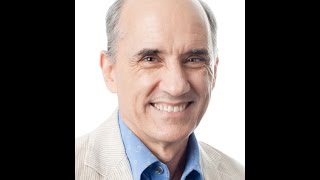
Dan Barker "Life Driven Purpose - How an Atheist Finds Meaning"
Ethical Humanist Society of Chicago
video
Video
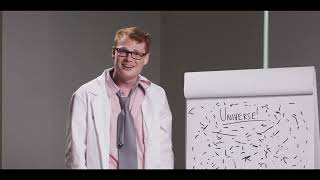
Ian McConnell - Season 1 - EP. 4: Important
Ian McConnell
Behold, the meaning of life! I'm not important and neither are you. So let's do whatever we wanna do.

Video
What is the Meaning of Life as an Atheist? (Finding Meaning without God)
Holy Koolaid
What is the meaning of life? What is the purpose of life? The problem with these questions is the word "the." As if there's only one. Pastors often ask how you can have meaning without God. But to quote Dan Barker, this is like asking, "without a master, whose slave will I be?" The beauty of life is that as an atheist you're free to find your own meaning - finding beauty, purpose, and happiness in the things that mean something to you.

Video
Life and Death: A Cosmic Perspective from Neil deGrasse Tyson
StarTalk
An excerpt from Neil's upcoming book 'Starry Messenger: Cosmic Perspectives on Civilization.' Should we live forever? What happens to us after we die? What is the statistical probability of being alive? Tyson exercises mathematical prowess and scientific eloquence to grapple with questions

Video
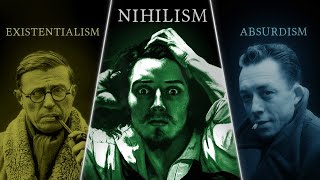
Nihilism vs. Existentialism vs. Absurdism -- Explained and Compared
The Living Philosophy
What is the difference between Nihilism vs. Existentialism vs. Absurdism? The common ground they share is that they are all responses to philosophy's timeless clichéd question "what is the meaning of life?" Nihilism came into full bloom in the 19th century as the full implications of modernism came to fruition. Existentialism and Absurdism are two ways of responding to the crisis of Nihilism.
Video
What to do when your worldview falls apart
TED Talks
What do you do when everything you believe about the world crumbles to pieces around you? How do you rebuild a sense of hope, meaning, and truth? Philosophy professor Danielle LaSusa suggests that demolishing your old worldview--and rebuilding it anew--are essential for critical thinking and deep learning. She knows from experience.

Video
Leaving My Father's Faith
Matt Dean Films
Feature Length Documentary From Director John Wright and Executive Producer Matt Dean: International best selling author and pastor Tony Campolo is devastated when his 50 year old son Bart announces that he no longer believes in God. Having worked together for decades in Christian ministry, the two must now find a way reconcile their personal understandings of Christianity and Humanism before a rift separates them indefinitely.
Video
How to Leave Religion Behind Without Regret
Resource Director
Leaving religion behind is a transformative journey, but it can be overwhelming without the right tools and mindset. In this video, I share 10 essential tips to help you navigate the process of deconstructing religion in 2025. From grieving what you’ve lost to discovering your true core values and finding awe in new ways, these practical steps will empower you to reclaim your autonomy and thrive beyond faith. With my experience as an atheist spiritual director and a background in theology, I provide actionable advice and relatable stories to guide you through this pivotal transition. Whether you're struggling with the fears instilled by religion, learning to reframe rituals, or building a supportive community, this video offers a comprehensive roadmap for leaving religion behind. Together, we’ll uncover the tools you need to create a life that aligns with your values and brings you genuine peace and fulfillment. Watch now to take the first step toward freedom and a brighter future.
📄 Articles(10)
Article
The Paradoxical Secret to Finding Meaning in Life
Psychology Today
Searching for meaning might backfire.
Article
There Are Actually 3 Types of Empathy. Here's How They Differ--and How You Can Develop Them All
Justin Bariso
Understanding the three types of empathy can help you build stronger, healthier relationships.
Article
Atheism, Meaning, and the Absurdity of It All
David Niose
Can life have meaning without belief in God?
Article
Logic-Based Therapy to Go
Resources
This is the platform of logic-based therapy (LBT), a highly philosophical form of REBT and a leading modality of philosophical counseling, which I began developing in the mid-1980s. LBT adds some logic to the idea that you, not the events in your life themselves, upset you. It holds that you upset yourself by constructing “practical syllogisms” that prescribe your own unhappiness.
📚 Books(19)
Book
A Better Life: An Exploration Of Joy & Meaning In A World Without God
Chris Johnson
book, film, and podcast of atheists speaking out about joy and meaning in a world without God
Book
Living Without God: New Directions for Atheists, Agnostics, Secularists, and the Undecided
Ronald Aronson
Ronald Aronson has a mission: to demonstrate that a life without religion can be coherent, moral, and committed. Optimistic and stirring, Living Without God is less interested in attacking religion than in developing a positive philosophy for atheists, agnostics, secular humanists, skeptics, and freethinkers. Aronson proposes contemporary answers to Immanuel Kant's three great questions: What can I know? What ought I to do? What can I hope? Grounded in the sense that we are deeply dependent and interconnected beings who are rooted in the universe, nature, history, society, and the global economy, Living Without God explores the experience and issues of 21st–century secularists, especially in America. Reflecting on such perplexing questions as why we are grateful for life's gifts, who or what is responsible for inequalities, and how to live in the face of aging and dying, Living Without God is also refreshingly topical, touching on such subjects as contemporary terrorism, the war in Iraq, affirmative action, and the remarkable rise of Barack Obama.
Book
The Contemplative Skeptic: Spirituality For The Non-Religious And The Unorthodox
Barrett Evans
book
Book
Being You: A New Science of Consciousness
Anil Seth
Anil Seth's radical new theory of consciousness challenges our understanding of perception and reality, doing for brain science what Dawkins did for evolutionary biology.
Book
The Meaning of Human Existence
Edward O. Wilson
In The Meaning of Human Existence, his most philosophical work to date, Pulitzer Prize–winning biologist Edward O. Wilson grapples with these and other existential questions, examining what makes human beings supremely different from all other species. Searching for meaning in what Nietzsche once called "the rainbow colors" around the outer edges of knowledge and imagination, Wilson takes his readers on a journey, in the process bridging science and philosophy to create a twenty-first-century treatise on human existence--from our earliest inception to a provocative look at what the future of mankind portends.
Book
The Big Picture: On the Origins of Life, Meaning, and the Universe Itself
Sean Carroll
In short chapters filled with intriguing historical anecdotes, personal asides, and rigorous exposition, readers learn the difference between how the world works at the quantum level, the cosmic level, and the human level--and then how each connects to the other. Carroll's presentation of the principles that have guided the scientific revolution from Darwin and Einstein to the origins of life, consciousness, and the universe is dazzlingly unique.
Book
For Small Creatures Such as We: Rituals for Finding Meaning in Our Unlikely World
Sasha Sagan
Sasha Sagan was raised by secular parents, the astronomer Carl Sagan and the writer and producer Ann Druyan. They taught her that the natural world and vast cosmos are full of profound beauty, that science reveals truths more wondrous than any myth or fable. When Sagan herself became a mother, she began her own hunt for the natural phenomena behind our most treasured occasions--from births to deaths, holidays to weddings, anniversaries, and more--growing these roots into a new set of rituals for her young daughter that honor the joy and significance of each experience without relying on religious framework. As Sagan shares these rituals, For Small Creatures Such as We becomes a moving tribute to a father, a newborn daughter, a marriage, and the natural world--a celebration of life itself, and the power of our families and beliefs to bring us together.
Book
Finding Purpose in a Godless World: Why We Care Even If the Universe Doesn't
Ralph Lewis M.D.
A psychiatrist presents a compelling argument for how human purpose and caring emerged in a spontaneous and unguided universe.Can there be purpose without God? This book is about how human purpose and caring, like consciousness and absolutely everything else in existence, could plausibly have emerged and evolved unguided, bottom-up, in a spontaneous universe.A random world--which according to all the scientific evidence and despite our intuitions is the actual world we live in--is too often misconstrued as nihilistic, demotivating, or devoid of morality and meaning. Drawing on years of wide-ranging, intensive clinical experience as a psychiatrist, and his own family experience with cancer, Dr. Lewis helps readers understand how people cope with random adversity without relying on supernatural belief. In fact, as he explains, although coming to terms with randomness is often frightening, it can be liberating and empowering too.Written for those who desire a scientifically sound yet humanistic view of the world, Lewis's book examines science's inroads into the big questions that occupy religion and philosophy. He shows how our sense of purpose and meaning is entangled with mistaken intuitions that events in our lives happen for some intended cosmic reason and that the universe itself has inherent purpose. Dispelling this illusion, and integrating the findings of numerous scientific fields, he shows how not only the universe, life, and consciousness but also purpose, morality, and meaning could, in fact, have emerged and evolved spontaneously and unguided. There is persuasive evidence that these qualities evolved naturally and without mystery, biologically and culturally, in humans as conscious, goal-directed social animals.While acknowledging the social and psychological value of progressive forms of religion, the author respectfully critiques even the most sophisticated theistic arguments for a purposeful universe. Instead, he offers an evidence-based, realistic yet optimistic and empathetic perspective. This book will help people to see the scientific worldview of an unguided, spontaneous universe as awe-inspiring and foundational to building a more compassionate society.
Book
I Wonder
Annaka Harris
"I Wonder offers crucial lessons in emotional intelligence, starting with being secure in the face of uncertainty. Annaka Harris has woven a beautiful tapestry of art, storytelling, and profound wisdom. Any young child - and parent - will benefit from sharing this wondrous book together."--Daniel Goleman, author of the #1 bestseller Emotional Intelligence "I Wonder captures the beauty of life and the mystery of our world, sweeping child and adult into a powerful journey of discovery. Magnificent "--Daniel Siegel, author of Mindsight and The Whole-Brain Child Eva takes a walk with her mother and encounters a range of mysteries: from gravity, to life cycles, to the vastness of the universe. She learns that it's okay to say "I don't know," and she discovers that there are some things even adults don't know--mysteries for everyone to wonder about together I Wonder is a book that celebrates the feelings of awe and curiosity in children, as the foundation for all learning.
Book
Revolution of Hope
Resource Director
What is society's effect on the individual? This book is a compelling appeal to the humanization of an evermore technological society. Social theorist Erich Fromm gives a classic description of the madness of modern culture, so applicable to the 21st century. He A specter is stalking in our midst whom only a few can see with clarity. It is not the old ghosts of communism and fascism. It is a new a completely mechanized society, devoted to maximal material output and consumption directed by computers. Humankind itself is being transformed into a part of the total well-fed and entertained, yet passive and un-alive, with little feeling.
Book
Self-Compassion: The Proven Power of Being Kind to Yourself
Resource Director
Kristin Neff, Ph.D., says that it’s time to “stop beating yourself up and leave insecurity behind.” Self-Compassion: Stop Beating Yourself Up and Leave Insecurity Behind offers expert advice on how to limit self-criticism and offset its negative effects, enabling you to achieve your highest potential and a more contented, fulfilled life through the power of self-compassion. More and more, psychologists are turning away from an emphasis on self-esteem and moving toward self-compassion in the treatment of their patients—and Dr. Neff’s extraordinary book offers exercises and action plans for dealing with every emotionally debilitating struggle, be it parenting, weight loss, or any of the numerous trials of everyday living.
Book
How Pleasure Works: The New Science of Why We Like What We Like
Resource Director
Why is an artistic masterpiece worth millions more than a convincing forgery? Pleasure works in mysterious ways, as Paul Bloom reveals in this investigation of what we desire and why. Drawing on a wealth of surprising studies, Bloom investigates pleasures noble and seamy, lofty and mundane, to reveal that our enjoyment of a given thing is determined not by what we can see and touch but by our beliefs about that thing’s history, origin, and deeper nature.
🎙️ Podcasts(1)
📁 Other Resources(2)
Channel
Life After Christianity & Christianity Through the Lens of Cognitive Science
Valerie Tarico
channel
Channel
channel
Kurzgesagt – In a Nutshell
Animation videos explaining things with optimistic nihilism since 12,013. We're a team of illustrators, animators, number crunchers and one dog who aim to spark curiosity about science and the world we live in. To us nothing is boring if you tell a good story.